The subscription business model has changed the way people buy products and services. Earlier, customers mostly paid once and used a product until they needed it again. Today, many businesses earn by charging customers weekly, monthly, quarterly, or yearly. From OTT platforms and cloud software to meal boxes, fitness apps, beauty products, learning platforms, newspapers, and even grocery delivery plans, subscriptions are now everywhere.
The main appeal of this model is simple: instead of depending only on one-time sales, a business gets repeated income from the same customer. This creates more stability, better planning, and stronger customer relationships. For customers, subscriptions can also be convenient because they get regular access without buying again and again.
But the model is not automatically successful. Customers will continue paying only if they feel real value every month. If the service becomes boring, expensive, weak, or unnecessary, they cancel. That cancellation rate, called churn, is one of the biggest challenges in the subscription business.
So before starting a subscription-based business, one must understand both sides properly. It can be a powerful model, but only when pricing, service quality, customer retention, and long-term value are managed carefully.
What Is the Subscription Business Model?
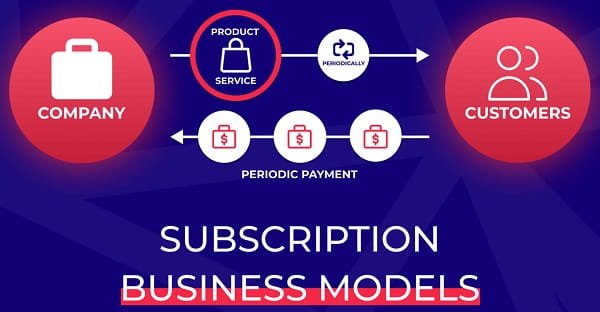
The subscription business model is a business system where customers pay a recurring amount to use a product or service for a specific period. This payment may be monthly, yearly, or based on another billing cycle.
Instead of buying something only once, the customer continues paying as long as they want access. The business earns recurring revenue, and the customer receives regular value.
Examples include:
- Netflix-style OTT platforms
- SaaS software tools
- Online learning platforms
- Digital newspapers
- Gym memberships
- Cloud storage plans
- Meal delivery subscriptions
- Beauty box subscriptions
- Music streaming apps
- Paid newsletters
- Business software subscriptions
In this model, the focus is not only on getting customers once. The real focus is on keeping them for a long time.
Core Advantages of the Subscription Business Model
1. Regular and Predictable Revenue
The biggest advantage of the subscription model is recurring income. In a normal sales model, the business must keep finding new customers every day to generate revenue. But in a subscription model, existing customers keep paying regularly.
This helps the business predict monthly income more clearly. If 1,000 customers are paying ₹500 per month, the business can estimate revenue better than a one-time sales business.
Predictable income helps in planning salaries, marketing, product development, stock, technology, and expansion.
2. Better Customer Retention
A subscription business is built around long-term relationships. Once a customer subscribes, the business gets repeated opportunities to serve them.
This is better than selling once and losing contact. A strong subscription business keeps customers engaged through new content, better features, fresh products, regular updates, loyalty benefits, and good service.
When customers stay longer, the business earns more from each customer over time.
3. Lower Pressure to Find New Customers Constantly
Every business needs new customers. But in a subscription model, growth does not depend only on new sales. Existing subscribers also bring regular revenue.
This reduces pressure. The company can focus on improving service, reducing cancellations, and increasing customer satisfaction.
For example, a software company with long-term subscribers does not need to start from zero every month. It already has a base revenue from existing users.
4. Stronger Customer Data and Insights
Subscription businesses get repeated data from customers. They can understand what people use, what they ignore, when they cancel, which plan they prefer, and what features they value most.
This data helps in improving the product or service. A business can create better plans, personalised offers, upgrades, and retention strategies.
For example, an online learning platform can see which courses students complete, where they drop out, and what kind of content attracts more renewals.
5. Easier Upselling and Cross-Selling
Once customers trust a subscription business, it becomes easier to sell higher plans or additional services.
For example, a basic software user may upgrade to a premium plan. A fitness app subscriber may buy a diet plan. A grooming subscription customer may add skincare products. An OTT user may move from a mobile plan to a family plan.
This increases revenue without always needing a completely new customer.
6. Builds Long-Term Brand Loyalty
A good subscription service becomes part of the customer’s routine. People may watch content daily, use software for work, receive products monthly, or follow a learning plan weekly.
When a service becomes a habit, brand loyalty becomes stronger. The customer does not think of competitors easily unless the service quality drops or the price becomes too high.
This habit-based loyalty is one reason many subscription businesses become powerful.
7. Useful for Scaling Digital Products
The subscription model works especially well for digital products such as software, apps, online courses, newsletters, cloud storage, digital tools, and entertainment platforms.
Once the product is built, the same system can serve many customers. The cost of adding one more user may be lower than in a physical product business.
This makes the model attractive for technology companies and digital businesses.
Core Disadvantages of the Subscription Business Model
1. Customer Churn Is a Big Risk
The biggest disadvantage of the subscription model is churn. Churn means customers cancel their subscription.
If many customers leave every month, the business will struggle even if new customers are joining. High churn means the service is not giving enough value, the price is too high, or customers do not feel the need to continue.
A subscription business must constantly ask: why should the customer pay again next month?
2. High Pressure to Deliver Continuous Value
In a one-time sale, the customer pays once. In a subscription model, the customer judges the business again and again.
This creates pressure. A content platform needs fresh content. A software company needs updates and support. A meal subscription needs consistent quality. A fitness app needs engagement. A product box needs surprise and usefulness.
If the customer feels bored or ignored, cancellation becomes easy.
3. Customer Acquisition Can Be Expensive
Many subscription businesses spend heavily on ads, discounts, free trials, influencer marketing, referral offers, and launch campaigns to attract customers.
The problem is that the first payment may not cover the cost of acquiring the customer. The business becomes profitable only if the customer stays for several months.
If customers cancel early, the business loses money.
4. Free Trial Users May Not Convert
Many subscription businesses offer free trials to attract users. This can work well, but it also has a risk.
Some people use the free trial and cancel before payment. Some sign up only for offers. Some never become serious users.
If the business depends too much on free trials without a proper conversion strategy, revenue may not grow as expected.
5. Pricing Is Difficult
Subscription pricing looks simple, but it is actually tricky. If the price is too high, customers may not subscribe. If the price is too low, the business may not earn enough profit.
The business must also decide whether to offer monthly plans, yearly plans, family plans, student plans, premium plans, or usage-based pricing.
Wrong pricing can damage growth. Customers must feel that the subscription is worth the money.
6. Cancellation Is Easy
In many subscription businesses, cancellation is just one click away. This is good for customers, but risky for businesses.
If customers do not use the service regularly, they may cancel quickly. If they find a cheaper alternative, they may shift. If they face one bad experience, they may stop paying.
This means the business must constantly maintain quality and engagement.
7. Operational Pressure in Physical Subscription Businesses
For digital subscriptions, delivery is easier. But for physical subscription businesses, operations can be complex.
Meal boxes, grocery kits, beauty boxes, pet supplies, stationery packs, or monthly product deliveries require stock planning, packaging, shipping, returns, damaged goods handling, and customer support.
If delivery is late or product quality is poor, customers may cancel immediately.
8. Revenue Can Look Strong but Profit May Be Weak
A subscription business may show attractive monthly revenue, but profit can still be low. Costs like marketing, technology, content creation, product sourcing, delivery, payment gateway charges, customer support, refunds, and discounts can reduce profit.
That is why businesses must track not only subscriber count, but also net profit, churn, customer lifetime value, and acquisition cost.
When Is the Subscription Model a Good Choice?
The subscription model is a good choice when the product or service gives repeated value. It works well when customers need regular access, regular delivery, regular updates, or continuous support.
It is suitable for software, learning platforms, fitness services, content platforms, digital tools, newsletters, cloud services, personal care products, food delivery plans, and maintenance services.
The model works best when the business can keep customers engaged for months or years.
When Should You Avoid the Subscription Model?
You should avoid the subscription model if the product is rarely needed, has weak repeat value, or cannot justify regular payment. It may also not work if the business cannot maintain service quality every month.
If customers only need the product once or twice, a one-time sales model may be better.
FAQs
Q1. What is the most important metric in a subscription business?
A: Churn rate is one of the most important metrics. It shows how many customers are cancelling the subscription. A business may get many new subscribers, but if too many are leaving, growth will remain weak.
Q2. Is a subscription model better than one-time sales?
A: It depends on the product. Subscription is better when customers need continuous value. One-time sales are better when the product is not needed regularly. For example, software can work well as a subscription, but a rare-use household item may not.
Q3. How can a subscription business reduce cancellations?
A: A business can reduce cancellations by improving product quality, giving regular updates, offering good customer support, sending useful reminders, creating flexible plans, and making customers feel that the service is worth the monthly cost.
Q4. Can a small business use the subscription model?
A: Yes, small businesses can use this model if they offer repeat value. Examples include monthly snack boxes, tuition plans, digital classes, grooming kits, local food subscriptions, maintenance services, and paid community memberships.